
Designing Carbon Clarity
How Michael Vereb Builds Tools that Change Behavior

When people talk about climate tech, they often jump straight to the science, the policy, or the carbon math. But one piece that doesn’t get nearly enough attention is design, and how it can unlock action in spaces that are slow, complex, and often stuck.
I spoke with Michael Vereb, Creative Lead at Arbor, about how his team is using design thinking to help companies tackle one of climate tech’s most pertinent challenges: tracking and reducing emissions.
Michael’s Path to Climate Design
Michael grew up in rural Canada, building apps in high school, and running a $5 website business with friends. One volunteer experience working with apparel brands opened his eyes to the industry’s sustainability blind spots. From there, he leaned into design, as a tool to simplify complexity and drive change.
“Design helps people understand something they might otherwise ignore, and act on it,” he told me.
That idea stuck with me. Because in climate tech, the barrier isn’t just awareness. It’s action. And design is often the missing link.
The Real Problem Arbor Is Solving
Arbor started out as a browser extension to surface ESG data. But the team quickly realized that most companies were flying blind on emissions and they had an opportunity to fill this market gap.
Today, Arbor helps brands like Crocs map their emissions across supply chains and make smarter decisions. One recent example: a single material switch led to a 3% drop in total company emissions. Significant climate impact, driven by visibility through design.
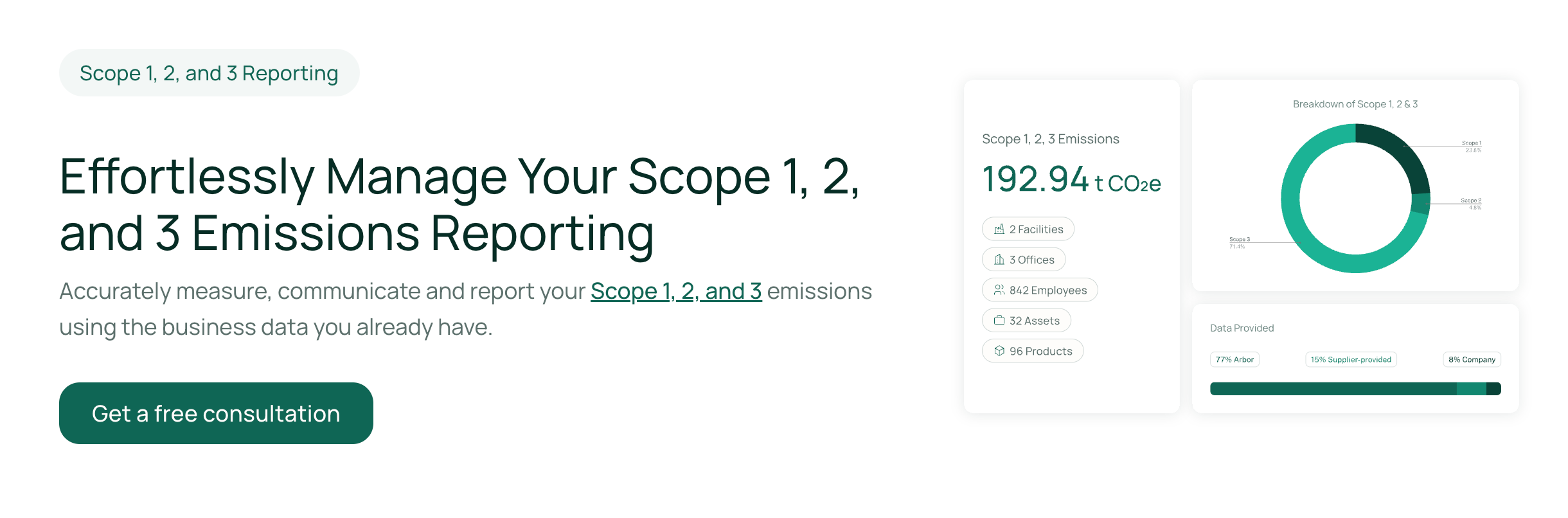
The Design Challenge: Behavior Change
The challenge of reducing emissions is that companies aren’t built to use less. They’re built to grow. Investors and shareholders don’t want consumption to go down, not really.
Michael’s challenge is to design tools that don’t just report emissions but nudge teams to change how they operate. That’s where features like hotspot analysis come in, visuals that show exactly where emissions are concentrated (often in raw materials) and where action will make the biggest dent.
“The goal isn’t to guilt people into compliance,” Michael said. “It’s to make acting on climate feel like smart business.”
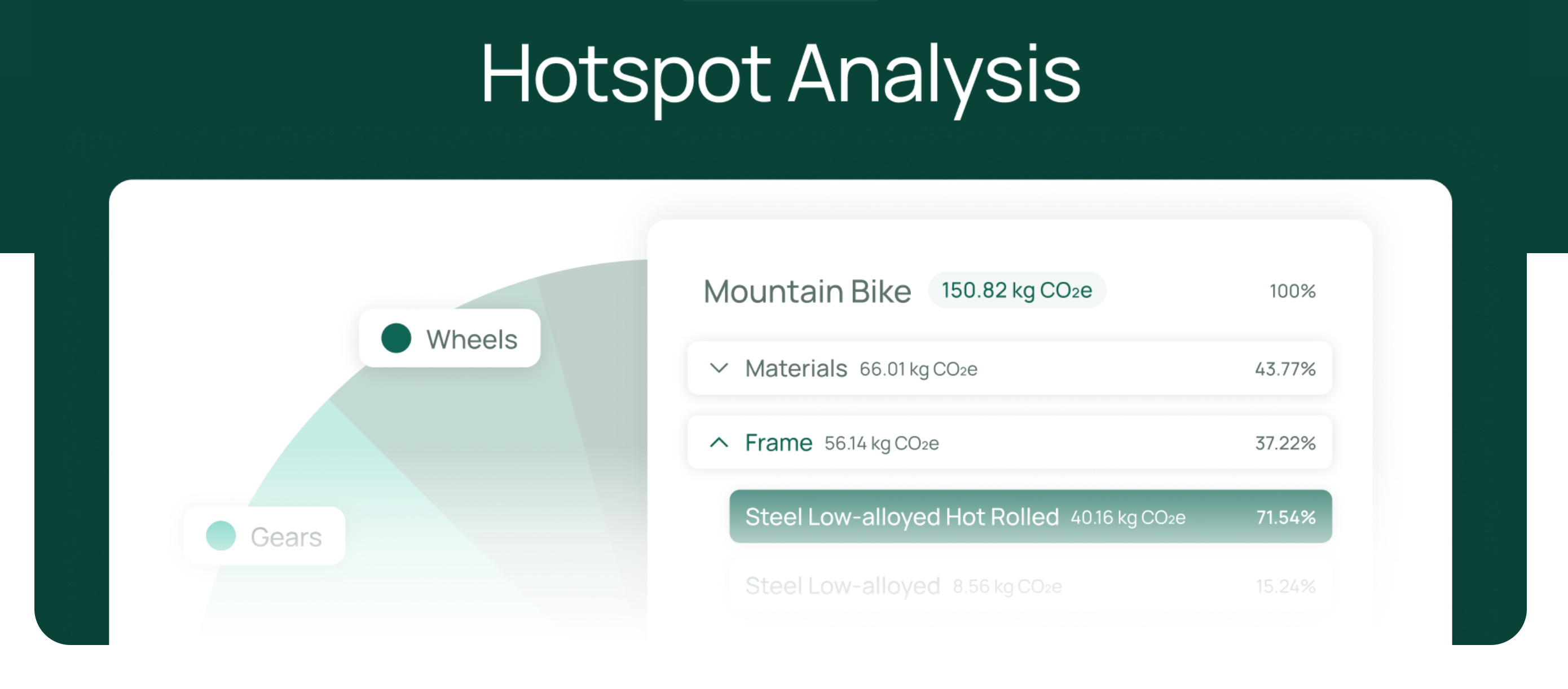
That framing matters, because when design translates climate data into business intelligence, it gives operators a reason to care and a way to act.
Where AI Fits In
Michael and the team use AI for both product development and internal workflows:
Gemini for content: AI drafts, humans refine.
RAG-based apps: Internal tooling to help the sales team surface information from dense documentation.
Figma + Webflow: To accelerate design-to-ship speed.
SEO evolution: As search shifts, Arbor invests in schema markup and authoritative content.
Interestingly, Michael noted that ChatGPT often surfaces Arbor organically, a signal that content strategy and product relevance are converging.
The Regulation Reality
Regulations are tightening, but not everywhere, and not evenly.
Michael’s take is that for laggards, regulation is the only push that works. For leaders, it’s just the floor. He’s more encouraged by Canadian and EU mandates than what’s happening in the U.S. right now, but believes the momentum is shifting globally.
What matters is whether companies go beyond the checkbox.
What He’s Building Next
Michael is constantly pushing the envelope of what is possible at Arbor. Most recently, building a sustainability regulation tracker that breaks down laws by country. Something useful to help others move faster.
That’s the mindset I love seeing in climate tech: don’t wait for permission, just build the thing that needs to exist.
This is part of an ongoing series where I talk to builders tackling climate problems with practical tools, sharp design, and hard-earned insight. Want more? Subscribe to stay in the loop.